Prodigal Magazine

How Becoming A Good Christian Made Me A Bad Person

I’ve never been a particularly good Christian, if I’m being honest.

I always wanted to be. I watched other people do it and it seemed to come really naturally to them — giving, serving, offering compassion to those who didn’t deserve it, memorizing Bible verses, that sort of thing. Grace and peace and love seemed to fill them up from the inside out and run over the top of them spilling all over those around them. I wanted to be like them but, honestly, felt like it probably wasn’t worth the effort.

I must not be like them.

Then, something happened.

I found this church. I know lots of people have bad stories about church, about how it’s hurt them or wrecked them. But this is not a church story like that. This church didn’t ruin anything. They embraced me, pulled me in, made me believe the most radical notion I could imagine — that I was loved beyond measure and was not a mistake.

I unfolded in that place. Surrounded by hundreds of people who loved God, I surrendered to the idea I was not different from them, that that we were all equally and beautiful loved and created by Him.

I started doing what they did. I read my Bible in the mornings and started to memorize and learn. I went to church as many times a week as possible. My daily habits changed. If you were watching, you would have seen a dramatic shift. You would have seen me break addictions, take better care of myself, solidify my theology and start to understand and hear the voice of God in my life.

But what you wouldn’t have seen was the way I was taking all of this new input out of context. It wasn’t the church’s fault. It was mine.

Becoming a good Christian was making me a bad person.

Becoming a good Christian made me a bad listener. Where I used to be unsure of myself and my ideas about the world, I suddenly felt like I had a platform, a right, even an obligation to share my ideas with everyone. I was a child of God, after all, and the vision was becoming clearer day by day. There was a sense of urgency to communicate truth before we “ran out” of time.

Instead of listening to people and their stories, I ran right over the top of them. I took my words and ideas and even my intellect and used it like a blunt object I could smack over the top of their heads. God had given me the authority, I assumed, now that I was a part of his club. I thought I was doing everyone a favor.

What I didn’t realize was that it wasn’t my responsibility to save anyone.

I couldn’t even save myself.

At the same time being a good Christian made me feel confident in my ideas, it made me feel insecure in my feelings. If what I felt didn’t line up with God’s truth, or the way a Christian was “supposed” to feel, I assumed there was no value in it, and worried if I was honest about what I felt, everyone would see what I’d been worried about all along — I was a fraud. I didn’t belong.

So I learned to keep my mouth shut. I kept feelings to myself and, because feelings were so powerful, avoided anything that made me feel too much. I segregated and separated myself from movies, TV shows, friendships and social events under the guise I was “in the world but not of it.” I pretended to be someone I wasn’t.

What I didn’t realize was God never asked me to become a good Christian.

He asked me to become more like Him.

Here’s the thing about becoming like God. He is diverse and multi-faceted. He is integrated and whimsical. He is graceful and just. He is smart and playful. He is full of wrath and radically forgives. He is joyful and yet grieves over injustice. He is not either/or. He is both/and. When it comes to becoming like Him, there is no formula we can follow.

In fact, becoming like Him, as far as I’m concerned, is a little bit like becoming more like us. I was right to assume that I was equally loved and accepted by God, but wrong to assume I was no different than other Christians.

Of course I was different. People are different.

Something goes wrong when we all try to become like each other. We force ourselves into roles we were never designed to play, exhaust ourselves trying to coax other people to our side. It’s stupid. At the end of the day, if you leave your side, or I leave mine, we lose the beauty and the balance that is this concentric circle — this holistic picture and reflection of God’s light.

Donald Miller says, “Without diversity we can’t grow,” and I think he’s right.

When we try to be the same we get stuck, stunted. We don’t grow up.

My spiritual life won’t like yours. It shouldn’t. It’s not supposed to. And if I try to make it like yours, I’ll miss what I was supposed to see all along — the image of God himself, the balancing point, the center of the circle, what we create when we all stand together and lean into it — listening to stories that aren’t like ours, practicing different disciplines, fixating on Him even in changing cultures and seasons —

God’s image. God’s artwork.

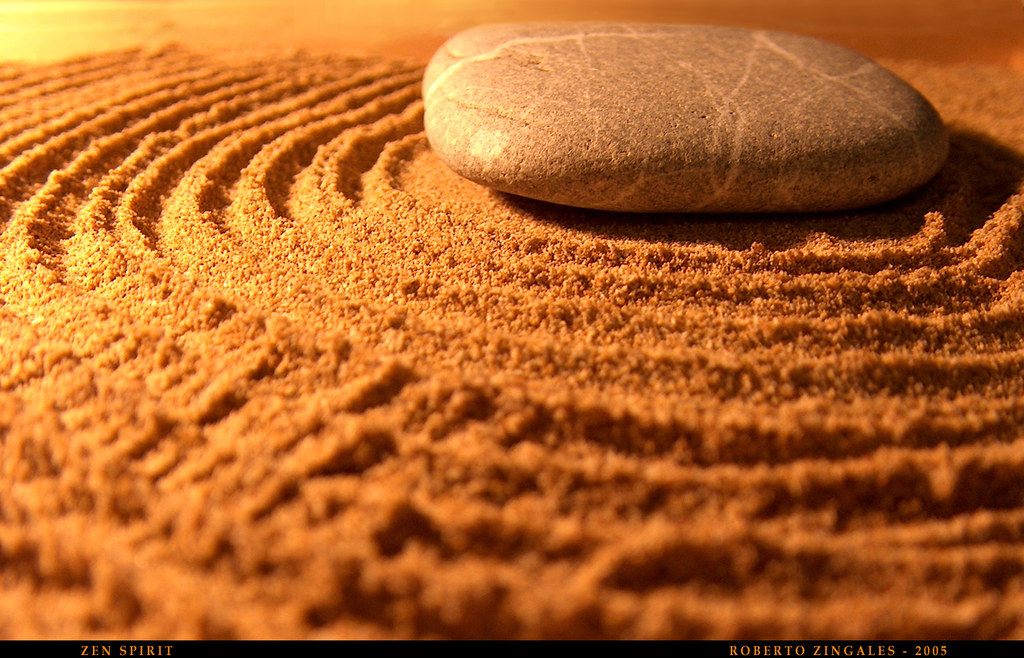
[Photo: brlnpics123, Creative Commons]

About The Author

Allison is a writer, managing editor of Prodigal Magazine and author of Packing Light: Thoughts on Living Life with Less Baggage (Moody, 2013). She lives in Minneapolis, Minnesota with her husband Darrell. You can follow her daily on Twitter or Facebook.

  • Dash

    Wonderful and simply so, wonderful.

    • http://www.facebook.com/allison.vesterfelt.7 Ally Vesterfelt

      Thanks! Glad you liked it.

  • http://twitter.com/ShawnSpjut Shawn Spjut

    An amazing description of what so many of us face; get saved and become integrated into the ‘Borg’ syndrome of Christianity. Somehow we’ve allowed ourselves to become convinced that God may have loved us before we said yes to Christ, but He’ll really love us a lot more if we become someone else after. I don’t think cloning us is what He had in mind.

    • http://www.facebook.com/allison.vesterfelt.7 Ally Vesterfelt

      Thanks Shawn! You’re right. I always think God will love me more if I [fill-in-the-blank] and all along I think he’s waiting for me to be me, so he can love me and transform me from the inside out.

  • Marisa

    Being a living stone is so much better than being a brick! I love to sit at the river and focus in on all the different stones in just one small area. They are all drastically different, but they make up a beautiful picture that is, all at once, healing, refreshing, inspiring, and comforting. Man made bricks just don’t have it, no matter how “perfectly” formed.

    • http://www.facebook.com/allison.vesterfelt.7 Ally Vesterfelt

      Wow, what a beautiful image, Marisa! Thank you for sharing. It’s so poetic and powerful. I love it.

  • Driveby

    Sums up exactly what keeps me away from church – an overwhelming message to quiet my own thoughts and voice, to stop thinking critically. The notion that if one doesn’t accept the Bible as the word of God, one can’t be a Christian. It is reminiscent of the times that various denominations were formed – knowledge was a rare commodity, so you leave it up to an authority to tell you what to believe. But knowledge is no longer rare, and while I have a strong faith in God, I do not have faith in the humans that have tried to claim a monopoly on the word of God.

    • http://www.facebook.com/allison.vesterfelt.7 Ally Vesterfelt

      Thank you so much for sharing part of your story. I think what you said about humans claiming a monopoly on the word of God is true, and I think it probably comes from our fear of not understanding him fully. It’s silly, but I think we’re very scared of not being able to wrap our minds all the way around him.

      Anyway, I’m so sorry that you’ve been hurt by Christians who have tried to make God more manageable than he his. I hope you find healing in relationship with other people who let you chase God and also be you. Thank you again for sharing.

  • http://www.cross-platform.org John Hanan

    “What I didn’t realize was that it wasn’t my responsibility to save anyone.”

    So true. One of the harder lessons I’ve had to learn, and still need to be reminded of every now and then. Thanks for this.

    • http://www.facebook.com/allison.vesterfelt.7 Ally Vesterfelt

      Thanks John!

  • http://lightovercomesdarkness.com/ Rev Wendy Wolf

    Thanks Allison
    I really appreciate your wisdom, and I am sharing your post.

    When reading, i was reminded of 2 things that my favorite Christian teacher, Dr Bruce Morgan, used to say, all the time; and my expereince as well:

    1)

    “Love heals a lot of people, those who give it and those who receive it”

    When I came to the Lord as a teenager, it was the LOVE of the people in my house church that was the lever for me. Their love for each other, and for God was palpable – and it helped me open to the possibility that God is real, as well as experiencing the love of God, directly myself.

    2)
    “Some churches will want you to be in their box, so much so that they are willing to cut off your arms and legs to make you fit.
    “But, God calls us to come to our maturity (whole and complete as ourselves, perfection), as God uniquely made us to be: the acorn becomes an oak tree (the greek word is teleios, see http://biblesuite.com/greek/5046.htm )
    “ye shall therefore be perfect, as your Father who is in the heavens is perfect.”

    I have been aware of, and in intellectual alignment with this re-framing of perfection for decades now. I am called to be me, whole and complete in God. But it takes time to ALLOW the God’s perspective, true spiritual reality to deeply sink-in – it is taking me and God Lots of time.
    “be not conformed to this age, but be transformed by the renewing of your mind”

    We live in a world that expects and rewards idealized perfection – it is our culture, and this is increasing through ubiquitous advertising (programming) that tells us, YOU ARE NOT OK… so:
    - buy this product/service, so you can fit-in, be happy, get-by, and
    - work very hard, be successful on every level, so you can be an acceptable, love-worthy human; and so you can afford products/services : )

    Many of us learned at home, that we weren’t ENOUGH.
    I grew up in a home:
    - in which I was told I had to be (model) beautiful to be loved,
    - in which ‘looking good’ was the practice,
    - in which trying to be an idealized perfection was the goal,
    - in which earning A’s on my report card was an expected default – being exemplary = average,
    - in which I was trained that the reason my father bullied and beat me was because I was bad and I did it wrong (that was a lie; his rage was his addiction, not my fault).

    So, this transition to BEING OK, as I am, where I am; Experiencing that what I am doing, thinking, seeing,knowing, saying, feeling is OK; Knowing that I am beautiful, loved, and perfect in God… is taking a long time. It takes many of us a long time to overcome the lies we are schooled in, the programming, habits, pain, fear that we have learned, that we have lived.

    In my spiritual practice of allowing the EXPERIENCE of God’s love for me, spiritually allowing-in that I am OK, valuable, valid, whole and complete in God; heals me and helps me BE and DO in the world in more and more freedom and joy. Sometimes it feels like God’s transforming of me and my life is taking forever, but when I am seeing clearly, I look back from where I’ve come, and I am amazed at the miraculous journey.

    Thank you for making a space for me to share.

    in life, wendy

    • http://www.facebook.com/allison.vesterfelt.7 Ally Vesterfelt

      Thank you for sharing your story with us, Wendy. I think what you said about allowing the experience of God’s love to shape you and form you is really important. A healthy mental and spiritual life isn’t about ignoring truth, but about recognizing truth isn’t as limited as we make it seem. I love what Anne Lamott says. Something like, “You can tell you made God in your image when he hates all the same people you do.”

  • http://www.facebook.com/Brookeluby Brooke Gale Luby

    Ally, I love this so much. I resonated with 100% of it. My biggest shift in having a religious mindset came the moment I realized I couldn’t even save myself. But that was also the beginning of embracing grace. Thanks for sharing this.

    • http://www.facebook.com/allison.vesterfelt.7 Ally Vesterfelt

      You’re welcome Brooke! Thanks for sharing with us. Experiencing grace changes everything, doesn’t it?

  • http://ayearinthespirituallife.blogspot.com/ Dayna Renee Hackett Bickham

    “He is both/and” most amazing words ever. Thank you Father that you paint with a brush that is broad and detailed. Thank you for chiseling away the scales of lies I let grow on me and refining me to look more like you and less like my idea of you. And thanks Ally for writing this. Your words echo and vibrate….

    • http://www.facebook.com/allison.vesterfelt.7 Ally Vesterfelt

      Thank you Dayna. I’m so glad it resonated with you. What a lovely prayer you wrote here.

  • Jeff

    Simply amazing. Needed this right now. Attempting to be other people is exhausting.

    • http://www.facebook.com/allison.vesterfelt.7 Ally Vesterfelt

      Amen! Glad you liked it Jeff.

  • Jane

    thanks, that is so honest. Its so true that most of us go through that overly zealous stage! Where we are probably really annoying Christians.. almost Pharisees…. trying to fit the religious moulds that exist….. but praise God He wants better for us than that! :)

    • http://www.facebook.com/allison.vesterfelt.7 Ally Vesterfelt

      Jane, yeah, I agree. Many people do go through this phase. Maybe it is part of the process of finding faith. The only danger is some people get stuck here. Glad you liked the post! Thanks for reading and commenting.

  • Susan

    Your title is compelling because I so relate to it in my own journey–the title led me to read the article when I don’t usually read Prodigal from my inbox. Can I add something to think about though? In God being diverse and loving variety, might God as easily be represented with the pronoun “she” or perhaps with none at all if that is too uncomfortable for you? God isn’t male; the image of God includes male and female.Thanks for considering this.

    • http://www.facebook.com/allison.vesterfelt.7 Ally Vesterfelt

      Susan — thank you for reading and sharing your thoughts! I’ve always addressed God as “he” probably just because the Bible addresses him that way, but I actually recently wrote an article called, “If God were a She,” basically asking this same question… if it makes a difference which pronoun we use, and admitting that I’m open to changing. Do you address God as “she”? Or do you simply omit a pronoun? I’m just curious. The more I consider it, the more I think about how even language is limited in the way it can communicate truth about God.

      • Susan

        Thanks for taking the time to reply, Ally. I do often refer to God as “she” in my thought life, and sometimes I shift from “he” (which I grew up with as a “good” Christian!) and then I sit and think about how this changes how I view God in that particular situation. Often it is a refreshing and needed change! In my family, I avoid pronouns, but occasionally use “she” just as I occasionally use “he.” My seven year old son referred to God as “she” not long ago and blew my mind! But when he was three, he had announced that “God is a woman!” so I suppose it shouldn’t surprise me!

        • Susan

          You may find this a helpful read, Ally: Is it Okay to Call God Mother? Considering the Feminine Face of God, by Paul Smith. The author is surprisingly an evangelical, Baptist pastor of a large mid-west church and he has some wonderful Biblical insight on this issue. (The answer by the way is a resounding Yes!). I would like to check out your article if it is on Prodigal or will be.

  • Paul

    Ally, thank you for such a candid look at what many of us go through as Christians. It really is simple: be like Jesus. It’s our job to love and share, it’s His job to change hearts. How easy it is to push others aside “for the name of Christ.” How messed up is that?! The most productive, loving conversations that I have had were over a cup of coffee, discussing the stuff we DIDN’T know. I think that sometimes, as Christians, we need a good fat slice of humble pie. Thanks again. – Paul
    Marisa, great illustration by the way!

    • http://www.facebook.com/allison.vesterfelt.7 Ally Vesterfelt

      Paul — I’ve had some of those same experiences! I had a conversation with a room full of atheists one time where they asked me a hundred questions, and I said “I don’t know” about a hundred times, and at the end of the conversation they actually THANKED me for saying “I don’t know.” I loved that moment. So important. Thank you for sharing.

  • Author, Dylan Morrison

    Great wee article. Much Christian expression within faith communities is all about conformity to the Model pastor or priest. Such a mimetic or imitative desire flux eventually results in many cases of ‘sheep’ expulsion – an emotional freezing out of the disciple who becomes a clone of and thus a threat to the Model. Diversity of desire is key to healthy relationships within a Christian flock. http://theprodigalprophet.com

    • http://www.facebook.com/allison.vesterfelt.7 Ally Vesterfelt

      Yes, diversity is key — and sometimes even more diversity than makes us comfortable! Thanks for reading and sharing your thoughts.

  • Clark

    This is nice. I wish I could let myself believe in God. There is just no way he exists – there is too much evidence against and not enough for.

    • http://www.facebook.com/allison.vesterfelt.7 Ally Vesterfelt

      Clark — thank you for your comment. What is the evidence against God that keeps you from believing in him? I’m just curious, not trying to change your mind.

      • Clark

        There are so many different faiths and each is composed of people who are just as passionate as any other. The beliefs are often conflicting and yet all argue absolute truth. The only reason I was Catholic was because I was born into a Catholic family. Once I realized this it was hard to claim their beliefs as my own. It wasn’t so much a decision that I made to leave the church as it was a feeling that if I didn’t I was being dishonest to myself because in my heart I didn’t, couldn’t believe.

        • Paul

          Hey Clark – You make a great point. My wife was born into a Catholic family and she experienced the same thing that you have explained. She felt forced and later resented religion all together. We are both Christians now and we do believe in Jesus Christ and the Bible that talks about Him. I guess I see it this way: is it possible that what I believe and what the Bible says is false? Absolutely. When this life comes to an end, and I take my last breath, I have faith that I will be hanging out with Jesus in Heaven. I figure that, if for some crazy reason, I am wrong, I have nothing to lose. I would have attempted living a good life, loving like Jesus loved. Doing my best to put others before myself. I guess it’s a faith thing. We all live by faith to some extent. Getting up in the morning, hopping in our cars to drive to work, trusting that the sun will rise every morning and set every evening. God loves us so much that he gives us a choice. He loves you brother, no matter what you believe, who you are or what you’ve done. I’m a messed up dude, trying to figure life out myself. I’m no better than anybody else because of what I believe. God’s grace has gripped me (a whole separate conversation) and I have been changed. It’s there for anybody who chooses to receive it. I do know that the joy and peace that I have experienced in my life is not from this world, It’s something beyond here. Great to read your comment sir. Take Care -Paul

          • Thomas Aquinas

            This is Pascal’s Wager, restated. What about believing in leprechauns, or unicorns, or Zeus? If it turns our you’re wrong, then no biggie, right?

  • Yvette

    I love this. You’re expressing what I have been feeling for the past few years, but didn’t know how to deal with. Trying to find the balance between being myself and being a christian is hard because our definition of Christianity often changes from being like Christ to being like the church or being what religion tells us to be. While I know that there are things that I need to grow and improve on, I also know that part of what makes me unique are my imperfections and idiosyncrasies. Thanks for sharing your thoughts. It’s nice to know that I’m not the only one who feels this way.

  • kt

    This is so on-point and refreshingly reassuring! Thank you so much for writing it. kt

  • http://www.facebook.com/people/Joseph-Coyle/167700658 Joseph Coyle

    This…. :)